A ChatGPT alternative for confidential data
In most organisations, the question is no longer whether teams use generative AI, but with which documents. Banning it does not work: it pushes usage onto personal phones. Providing a credible alternative works. What remains is choosing which one.
The problem is not the tool, it is where the data travels
Consumer AI products are excellent. The problem is what happens when an employee drops a contract under negotiation, a medical file or a salary grid into one.
That document leaves your information system. It is processed by a third party, retained for some period, governed by a law that is not necessarily yours. You can no longer remove it with certainty, nor prove where it sits.
Unsanctioned use is the norm rather than the exception. That is what makes a purely disciplinary response ineffective: it removes visibility without removing risk.
The three families of alternatives
The serious options fall into three families, with very different levels of protection.
- Enterprise plans from consumer vendors: they add contractual commitments, opt-out from training on your data and sometimes regional hosting. The data still leaves your side.
- Private cloud or dedicated hosting: you rent isolated infrastructure from a provider. Better isolation, but dependency on the network and on the operator, and a bill that climbs with usage.
- On-premises local AI: models run on hardware installed inside your walls. No prompt leaves, the service works without internet, and the cost is predictable.
The criteria that actually decide
Beyond comparing feature lists, five questions are usually enough to settle it.
Does the service work if the connection drops? Can you demonstrate to an auditor that data did not leave? What will usage cost when it doubles? Are your directory's access rights honoured by the AI? And what becomes of your organisation if the vendor changes its terms?
The last question is the most structural. A dependency on a component that has become central to daily work does not carry the same weight as a dependency on a peripheral tool.
What local AI covers, and what it does not
Let us be precise. Local AI covers drafting and rewriting, summarising long documents, extracting structured information, searching an internal document base, translation and assisted contract review very well. That is the bulk of office work.
It is less suited to anything requiring up-to-date knowledge of the live web, or to the most demanding reasoning tasks where very large remote models keep an edge. Nothing prevents combining the two: local by default on sensitive documents, external by deliberate choice on everything else.
The DIWY approach
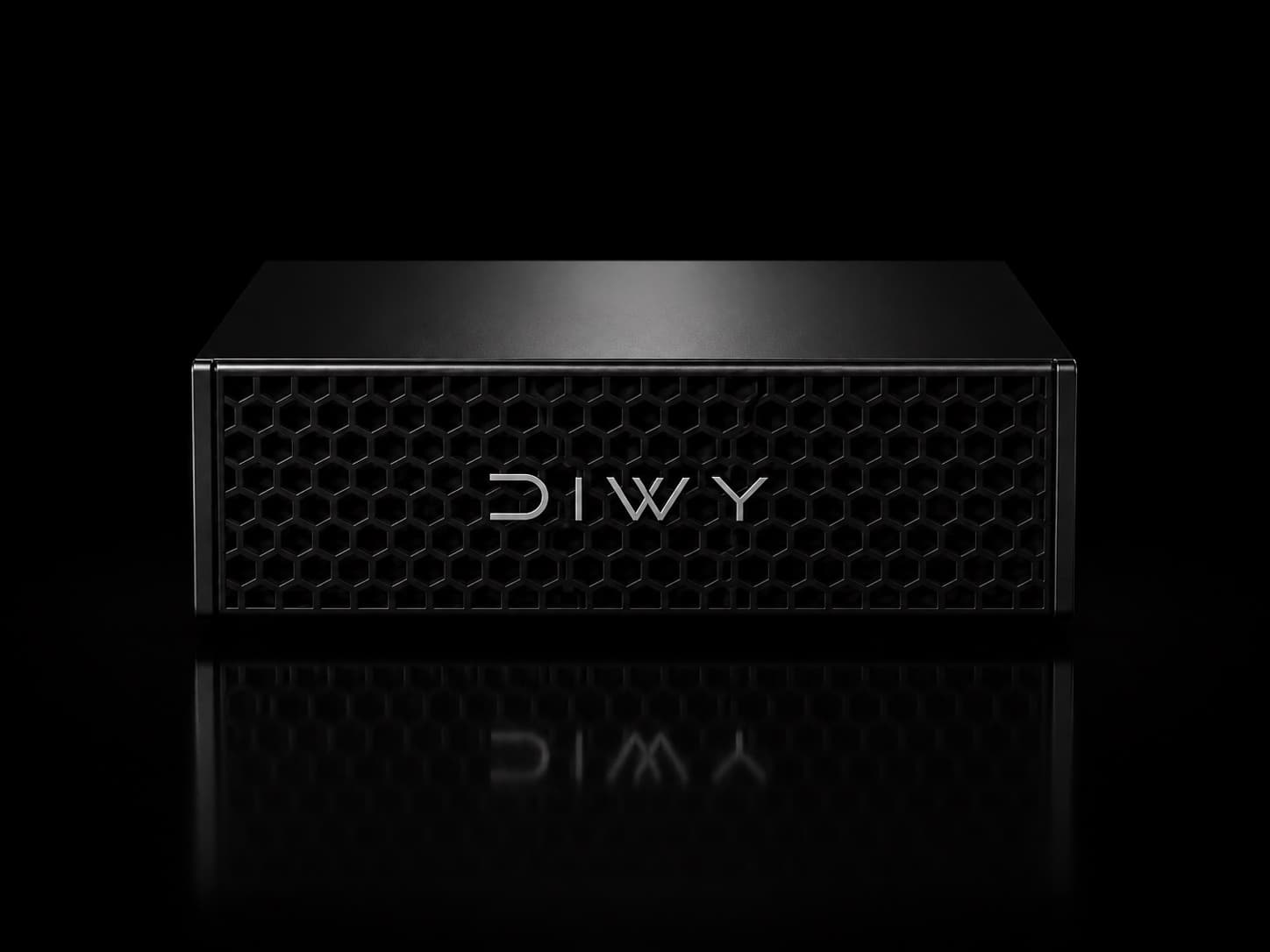
DIWY is a box that sits on your premises. It is built on an NVIDIA GB10 Grace Blackwell processor or equivalent, with 128 GB of unified memory and 2 to 4 TB of encrypted storage.
It does not expose a raw model. Devana OS runs two complete, offline applications on it: Suite 366, the sovereign work suite, and Devana, the enterprise AI platform. Your teams get an experience close to what they already know, without documents leaving the building.
The box is available now, delivered within 72 hours, at 500 € per month with a 24-month commitment or 750 € per month with no commitment.
Key points
- Banning consumer AI moves the risk instead of reducing it. Providing a credible alternative reduces it.
- An enterprise plan improves the contract, not where the data travels.
- Five questions separate the options: offline, proof, cost at scale, access rights, dependency.
- Local AI covers the bulk of office work and can coexist with external services on non-sensitive tasks.
Frequently asked questions
Is local AI as good as ChatGPT?
For everyday office work the gap is small and often imperceptible. On the most demanding reasoning tasks, very large remote models keep an edge. The fair comparison is at constant usage: local AI can work on your confidential documents, which remote AI cannot do without risk.
Will my teams have to change their habits?
Suite 366 and Devana offer an experience close to the tools they already use: chat, workspaces, document search. The shift is in the infrastructure, not in daily gestures.
How long does deployment take?
DIWY arrives preconfigured and plugs into your network. Delivery happens within 72 hours, and bringing it into service requires no IT project.
Can we keep access to external AI in parallel?
Yes. Many organisations adopt a simple rule: anything touching client data, contracts and HR goes through local AI, the rest can keep using external services.
Your AI, inside your walls.
DIWY is available now, delivered within 72 hours, preconfigured with your applications.
Order a DIWY*